
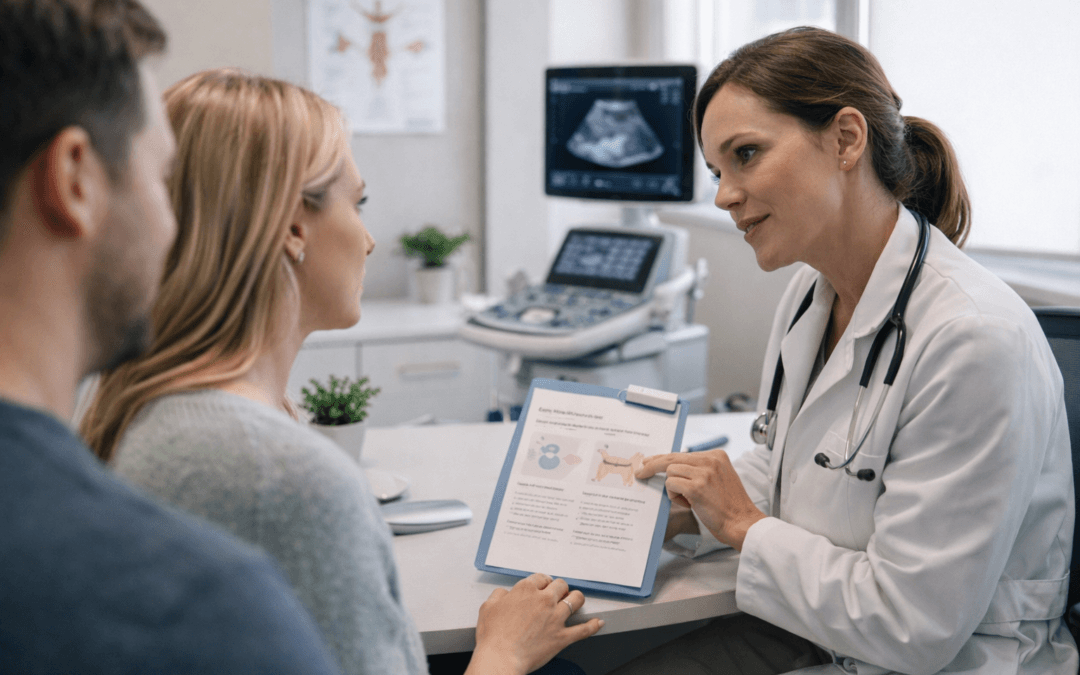
Understanding exactly what happens during egg donation helps both donors and intended parents feel prepared and confident. While the process involves multiple stages over several months, each step follows a clear timeline with professional support every step of the way.
Whether you’re considering becoming a donor or exploring egg donation to build your family, this detailed guide walks you through every phase of the egg donation process in Canada.
Overview: What to Expect from Start to Finish
The complete egg donation journey typically takes two to four months from initial application to egg retrieval. This timeline includes screening, matching, legal agreements, medical preparation, and the retrieval procedure itself.
Throughout the process, you’ll work closely with your fertility consultants, medical professionals, and support staff who guide you through each stage. Nothing happens without your full understanding and consent, and you’ll have opportunities to ask questions at every step.
Step 1: Initial Application and Inquiry
The journey begins when a potential donor submits an application to an egg donor agency or fertility clinic. This initial form collects basic information about your health history, lifestyle, and motivation for donating.
During this stage, you’ll provide details about your age, general health status, menstrual cycle regularity, family medical history, lifestyle factors such as smoking and alcohol use, and your reasons for wanting to donate.
The agency reviews your application to determine whether you meet the basic egg donor requirements. In Canada, donors typically need to be between 19 and 32 years of age, have a BMI between 18 and 29, be non-smokers, and be in good overall health.
If your initial application looks promising, you’ll receive a call to discuss the process in more detail and answer any questions you have about what lies ahead.
Step 2: Comprehensive Screening
Once your application is approved, you’ll undergo thorough screening to ensure you’re a suitable candidate for donation. This comprehensive evaluation protects both your health and the health of any resulting children.
Medical Screening
The medical screening includes several components. A physical examination assesses your overall health and reproductive system. Blood tests measure hormone levels including AMH (anti-Müllerian hormone), FSH (follicle-stimulating hormone), and estrogen, which indicate your ovarian reserve and how well your body may respond to stimulation medications.
You’ll also undergo infectious disease testing for conditions like HIV, hepatitis B and C, and other communicable diseases. A transvaginal ultrasound allows doctors to count antral follicles in your ovaries, giving them an idea of how many eggs you might produce.
Genetic Screening
Genetic carrier screening identifies whether you carry genes for hereditary conditions that could be passed to children. This typically involves testing for hundreds of genetic disorders, from common conditions like cystic fibrosis to rarer inherited diseases.
At Fertility Match, all donors complete comprehensive genetic screening, and results are cross-referenced with the sperm provider’s screening to ensure compatibility. This helps intended parents feel confident that embryos created won’t carry preventable genetic conditions.
Psychological Evaluation
Meeting with a fertility counsellor or psychologist is a required part of the screening process. This isn’t about passing or failing—it’s about making sure you fully understand the emotional aspects of donation and feel prepared for what’s ahead.
The counsellor will discuss your motivations for donating, explore your feelings about potential outcomes, assess your support system, and ensure you can handle the commitment involved. Many donors find this conversation helpful in clarifying their own feelings about the journey.
Step 3: Creating Your Donor Profile
After completing screening, you’ll create a detailed profile that intended parents will review when selecting a donor. This profile becomes your introduction to families who may choose to work with you.
Your egg donor profile typically includes physical characteristics like height, weight, eye colour, and hair colour, along with your educational and career background, personal interests and hobbies, photos from childhood or adulthood depending on the agency’s approach, and a personal statement about why you want to donate.
Many donors take time to craft thoughtful personal statements. Remember that intended parents are looking for someone they connect with, not perfection. Authenticity matters more than trying to present an idealized version of yourself.
Step 4: Matching with Intended Parents
Once your profile is active, intended parents begin reviewing it as they search for the right egg donor for their family. The matching process varies in length—some donors are selected quickly, while others wait longer.
When intended parents express interest in your profile, your agency facilitates the match. Depending on whether you’ve chosen known or semi-anonymous donation, you may or may not learn details about the intended parents at this stage.
Being matched is often an exciting moment for donors. It means a family has chosen you specifically to help them achieve their dream of parenthood.
Step 5: Legal Agreements
Before any medical procedures begin, all parties must sign a comprehensive legal agreement. This ovum donation contract protects everyone involved and ensures clear expectations.
The agreement addresses several crucial matters including intended parentage of any children born, the relationship between donor and intended parents before and after donation, how health information will be shared if needed in the future, reimbursement of the donor’s eligible expenses, and whether contact will be permitted and under what circumstances.
In Canada, egg donors cannot be paid for their eggs, but they can receive reimbursement for expenses related to the donation. These typically include travel and mileage costs, lost wages from time off work, medications and medical supplies, childcare during appointments, and vitamins and supplements.
Both intended parents and donors should receive independent legal advice, meaning each party has their own lawyer who explains the contract and protects their interests. The intended parents typically cover legal costs for both parties.
Step 6: Medical Preparation and Cycle Synchronization
With legal agreements signed, the medical phase begins. Your fertility clinic coordinates timing so that the egg retrieval aligns with the intended parents’ treatment plan.
Birth Control Pills (Optional)
Some protocols begin with a short course of birth control pills. This helps regulate your cycle and allows the medical team to control timing more precisely. Not all protocols require this step.
Baseline Monitoring
At the start of your menstrual cycle, you’ll have a baseline appointment that includes blood work and a transvaginal ultrasound. This confirms you’re ready to begin stimulation and establishes starting measurements for your follicles.
Step 7: Ovarian Stimulation
The stimulation phase is when your body prepares to produce multiple mature eggs instead of the single egg typically released each month. This stage lasts approximately 10 to 14 days.
Daily Hormone Injections
You’ll learn to self-administer daily injections of follicle-stimulating hormone (FSH) and sometimes luteinizing hormone (LH). Common medication names include Gonal-F, Follistim, and Menopur.
These injectable medications are synthetic or purified forms of hormones your body naturally produces. They stimulate your ovaries to develop multiple follicles, each containing an egg.
The injections are subcutaneous, meaning they go just under the skin rather than into muscle. Most donors administer them in the abdomen or thigh using small needles. While the idea of daily injections can feel daunting at first, many donors report they become routine quickly.
Preventing Premature Ovulation
About five days into stimulation, you’ll add a second medication called a GnRH antagonist, such as Cetrotide or Orgalutran. This prevents your body from ovulating before the eggs can be retrieved.
Without this medication, your body might release the eggs naturally, making retrieval impossible. Taking this medication at the prescribed times is crucial for a successful cycle.
Monitoring Appointments
Throughout stimulation, you’ll have frequent monitoring appointments, typically every two to three days. These quick visits include blood work to measure hormone levels and transvaginal ultrasounds to measure follicle growth.
The medical team uses this information to adjust your medication dosages and determine the optimal timing for retrieval. Most monitoring appointments are scheduled early in the morning and take only 15 to 30 minutes.
How You Might Feel
During stimulation, it’s normal to experience some side effects as your ovaries respond to the medications. Common experiences include bloating or abdominal fullness as follicles grow, breast tenderness, mild mood changes, fatigue, and increased vaginal discharge.
These symptoms typically resolve within a few days after retrieval. If you experience severe symptoms like rapid weight gain, severe bloating, or shortness of breath, contact your medical team immediately as these could indicate ovarian hyperstimulation syndrome.
Step 8: The Trigger Shot
When monitoring shows your follicles have reached optimal size, typically around 17 to 20 millimetres, you’ll receive instructions for the trigger shot. This final injection causes the eggs to complete their maturation process.
The trigger shot, usually containing hCG (human chorionic gonadotropin) or sometimes a GnRH agonist like buserelin, must be administered at a very specific time. Your clinic will call you with exact instructions, as timing is critical.
Egg retrieval occurs precisely 35 to 36 hours after the trigger shot—this window allows eggs to mature fully while preventing natural ovulation.
Step 9: Egg Retrieval Day
Retrieval day is when all the preparation comes together. The procedure itself is brief, typically lasting only 15 to 30 minutes.
Before the Procedure
You’ll arrive at the fertility clinic having fasted according to their instructions, usually nothing to eat or drink after midnight. Arrange for someone to drive you home afterward, as you’ll receive sedation and shouldn’t drive.
Plan to spend one to two hours at the clinic total, including preparation and recovery time.
The Retrieval Procedure
The egg retrieval is performed under light sedation or intravenous anesthesia, so you won’t feel pain during the procedure. An anaesthesiologist monitors you throughout to ensure your comfort and safety.
Using ultrasound guidance, the doctor inserts a thin needle through the vaginal wall to reach each ovary. Fluid is gently aspirated from each follicle, and the embryology team immediately examines it to identify and collect the eggs.
No incisions are made, and the procedure leaves no scars. Most donors describe the discomfort as similar to menstrual cramps.
Immediately After
You’ll rest in a recovery area while the sedation wears off. The medical team monitors you and provides instructions for aftercare before you go home. Most donors feel comfortable leaving within an hour of the procedure.
Step 10: Recovery and Aftercare
Recovery from egg retrieval is generally quick, though experiences vary.
The First Few Days
On retrieval day and the following day, rest is recommended. You may experience cramping similar to menstrual cramps, light spotting or bleeding, bloating and abdominal tenderness, and fatigue from the sedation.
Over-the-counter pain relievers like acetaminophen usually manage any discomfort. Avoid aspirin and ibuprofen, which can increase bleeding risk. Drink plenty of fluids and eat light, easily digestible foods.
Activity Restrictions
For about two weeks after retrieval, avoid strenuous exercise and heavy lifting. Your ovaries remain enlarged during this time, and vigorous activity increases the small risk of ovarian torsion, where the ovary twists on itself.
You should also avoid unprotected intercourse during the stimulation cycle and the following month, as you’ll be highly fertile and could become pregnant with remaining eggs.
Returning to Normal
Most donors resume normal activities within two to three days. Your menstrual period typically arrives five to ten days after retrieval, signalling that your body is returning to its normal cycle.
Within one to two cycles, your body should be completely back to normal with no lasting effects from the donation.
What Happens to the Eggs After Retrieval
After your retrieval, the eggs are fertilized with sperm in the laboratory to create embryos. The intended parents work with their medical team to decide on fresh versus frozen embryo transfer and other aspects of their treatment plan.
You’ve completed your part of the journey. The rest happens between the intended parents and their medical team as they work toward pregnancy.
Considering Donating Again
Many donors find the experience so rewarding that they choose to donate again. Following ASRM guidelines, Fertility Match allows a maximum of six lifetime donations with at least three months between each cycle.
This waiting period ensures your body fully recovers and maintains optimal egg quality for future donations.
Support Throughout Your Journey
Egg donation requires commitment, but you shouldn’t feel alone at any stage. From your first inquiry through recovery, your agency and medical team provide guidance and support.
If you’re considering egg donation and want to learn more about the process, contact Fertility Match for a free consultation. Our team includes people who understand the donation journey firsthand and can answer all your questions.
You can also read success stories from egg donors who have completed the process and hear about their experiences in their own words.
