
Egg donation is one of those experiences that many donors find deeply rewarding, rewarding enough that a lot of people who do it once want to know whether they can do it again. It’s a natural question, and an important one: how many times is it actually safe to donate your eggs, and who decides where the limit sits?
There are really two answers working together here. There’s a general medical guideline that fertility clinics across North America follow, and there’s each agency’s own policy layered on top of it. Understanding both will give you a clear picture of how many times you can donate and, just as importantly, why the limit exists in the first place.
Fertility Match is a Canadian egg donation matching agency that connects Intended Parents with carefully screened donors and protects every donor’s privacy, founded by people who understand this journey firsthand. Part of that care means holding to the health guidelines that keep repeat donation safe.
Is there an official legal limit in Canada?
Not a specific numeric one. Canada’s laws around egg donation, set out in the Assisted Human Reproduction Act, focus on things like keeping donation altruistic and unpaid; they don’t set a hard legal maximum on how many times a person can donate. Instead, the number of donations is governed by professional medical guidelines that fertility clinics follow, and by the screening policies that agencies apply.
Where the commonly cited limit comes from
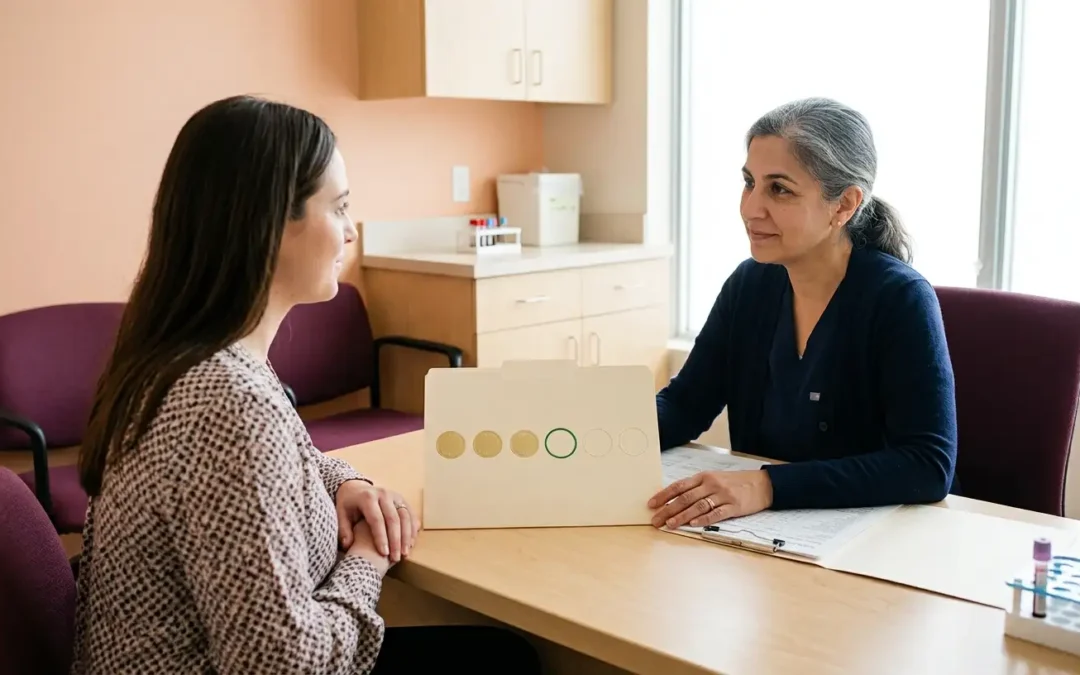
The figure you’ll hear most often is six. The widely followed professional recommendation in North America is that an egg donor complete no more than six stimulated cycles (that is, six retrievals) in her lifetime. Canadian clinics generally observe this guideline.
The limit exists for two reasons. The first is the donor’s own health: it caps the total number of times her ovaries are stimulated with fertility medication over a lifetime. The second is a population consideration: limiting the number of separate families created from one donor, which reduces the chance that genetically related children could unknowingly cross paths later in life.
Fertility Match's own policy
On top of the general guideline, we apply our own screening criterion. Fertility Match accepts new donors to our program who have had no more than five previous egg retrievals. That threshold keeps every donor in our program well within the accepted lifetime limit and leaves appropriate room for the cycle she’s applying for. It’s one of several health-based criteria we screen for, all of which you can review on our Become an Egg Donor qualification page.
Why the limit exists: the health reasons
Each donation cycle involves stimulating the ovaries with medication so that multiple eggs mature at once. That’s a safe, well-established process, but it does place temporary demand on the body. Capping the number of lifetime cycles limits cumulative exposure to those medications and to the retrieval procedure.
One specific concern the limit helps manage is ovarian hyperstimulation syndrome (OHSS), a condition where the ovaries over-respond to fertility medication. It’s usually mild and closely monitored, but it’s a key reason cycles are spaced out and capped. You can read more in our guide to OHSS and what to watch for. If you’re weighing repeat donation, it’s also worth reading through the things to watch out for when donating eggs.
How clinics protect you between cycles
The lifetime cap isn’t the only safeguard. Between donations, your body needs time to recover, so clinics build in a recovery period before another cycle can begin. And each new cycle isn’t automatic: the fertility clinic re-evaluates your health and fertility every single time, with fresh medical screening and clearance before proceeding.
That ongoing medical oversight is handled entirely by the fertility clinic, since Fertility Match is a matching agency rather than a clinic. Our part is to screen your history up front and make sure any donor we work with is within safe limits; the clinic’s part is the medical assessment each cycle. Our guide to what egg donor medical screening involves explains what that clinical check looks like.
Does donating multiple times affect your own fertility?
This is understandably the biggest worry for repeat donors. The eggs collected in a donation cycle come from the group your body would have matured and lost that month anyway, so a properly managed donation doesn’t “use up” your future eggs or bring menopause closer. The lifetime cycle limit and the recovery time between cycles exist precisely to keep repeat donation safe. We cover the evidence in more detail in can becoming an egg donor affect my future fertility.
Thinking about donating again?
If you’ve donated before and are considering doing it again, the key questions are how many retrievals you’ve already completed and whether you’re still within both the professional guideline and our own criteria. Donors with no more than five previous retrievals are welcome to apply, and we’ll help you understand where you stand. You can start on our egg donation in Canada page or go straight to checking your eligibility.
Taking the next step
So, how many times can you donate eggs? As a general rule, up to six lifetime retrievals under the guidelines Canadian clinics follow, and at Fertility Match, we welcome donors who’ve had no more than five previous retrievals. Those limits, along with recovery time between cycles and fresh medical clearance each time, are all designed around one thing: keeping you healthy.
If you’re thinking about donating for the first time or returning to donate again, contact us today and we’ll help you figure out your next step.
